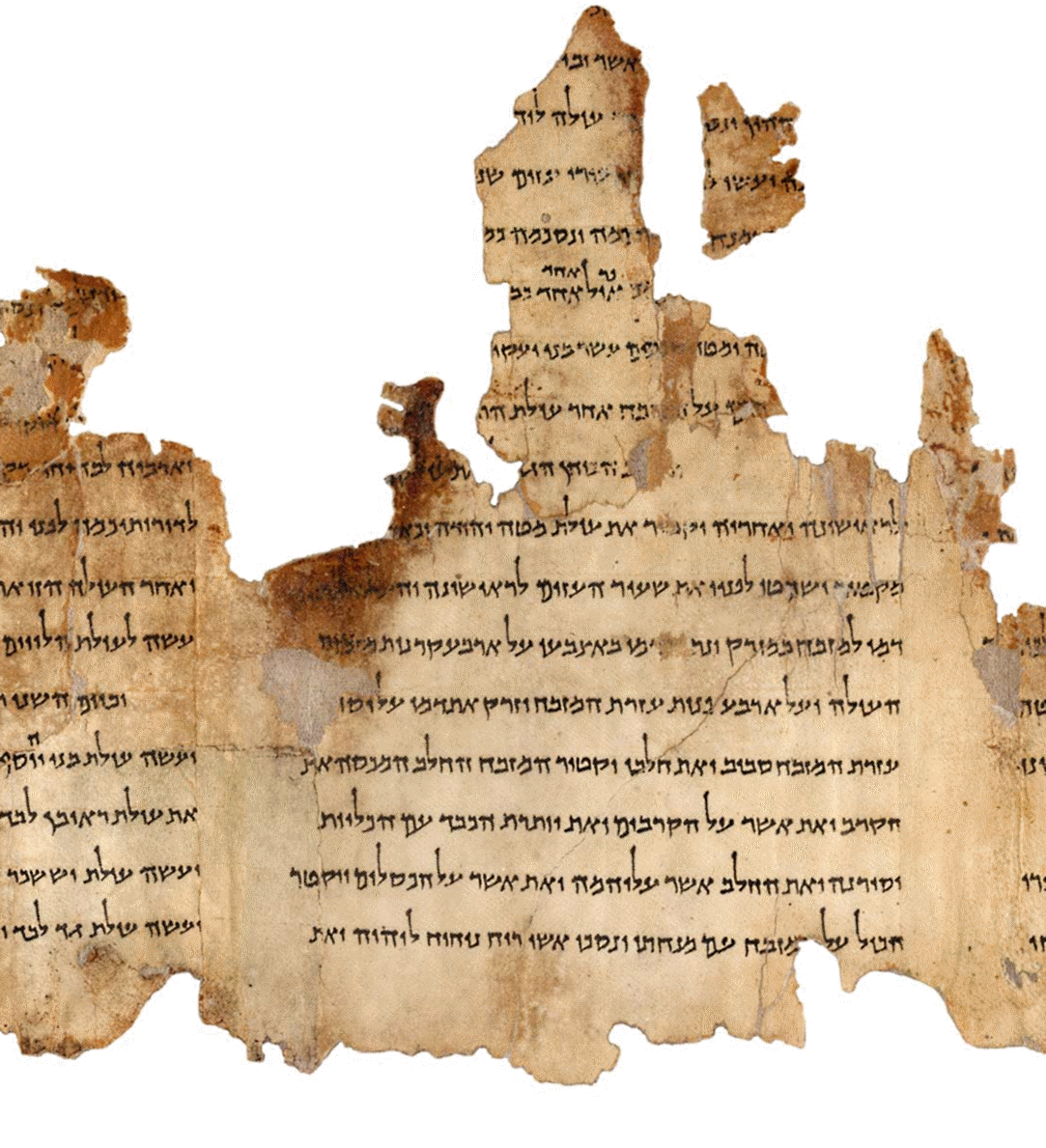
Recently I taught a course on the Dead Sea Scrolls (DSS), with the subtitle The Intersection between Archaeology and Religion, at the Osher Lifelong Learning Institute at the University of Illinois. It was a marvelous experience due to my wonderful co-teacher, Janet E. Guthrie, and the mature, alert, curious students at Olli.
Course description: The discovery and interpretation of the Dead Sea Scrolls radically changed our understanding of biblical archaeology, the development of the Bible, and the history of the Jewish and Christian faiths. Who were the people of Qumran? How did their beliefs and practices differ from those of other Jewish sects of the first and second centuries BCE? What does archaeology tell us about the scroll librarians and how they lived? What is the relationship between the scrolls and the Bible? This four-week class, taught by a retired archaeologist and a retired pastor, will explore the historical and archaeological context of the scrolls, the lifestyle of the people who wrote them, and the implications of these ancient documents for religious history.
BIBLIOGRAPHY
Note: The best starting places for learning about the scrolls are the overview by James C. VanderKam, The Dead Sea Scrolls Today and the edited volume Davies et al., The Complete World of the Dead Sea Scrolls.
Collins, John J. The Dead Sea Scrolls: A Biography. Princeton, NJ: Princeton Univ. Press, 2013. A volume in the Lives of Great Religious Books series. Includes an Appendix identifying “Personalities in the Discovery and Subsequent Controversies.”
Davies, Philip R., Brooke, George J., & Philip R. Callaway, The Complete World of the Dead Sea Scrolls. Thames and Hudson, 2002.
Flint, Peter W. & James C. VanderKam, eds. The Dead Sea Scrolls After Fifty Years: A Comprehensive Assessment. 2 volumes. Leiden: Brill, 1998 & 1999.
[Josephus]. The Works of Flavius Josephus (translated by William Whiston), available online through the Christian Classics Ethereal Library. http://www.ccel.org/ccel/josephus/works/
For a detailed description of the Essenes, see The War of the Jews, Book 2, Chapter 8. Jewish sects are also discussed in Antiquities of the Jews, Book 18, Chapter 1.
Lim, Timothy H. & John J. Collins, eds. The Oxford Handbook of The Dead Sea Scrolls. Oxford: Oxford University Press, 2010.
Magness, Jodi. The Archaeology of Qumran and the Dead Sea Scrolls. Grand Rapids, MI: William B. Eerdmans Publishing, 2002.
Magness, Jodi. The Archaeology of the Holy Land: From the Destruction of Solomon’s Temple to the Muslim Conquest (2012).
Martinez, Florentino Garcia. The Dead Sea Scrolls Translated: The Qumran Texts in English. Second Edition. Leiden: E. J. Brill & Grand Rapids, MI: Wm Eerdmans Publishing, 1996.
Ulrich, Eugene. The Dead Sea Scrolls and the Developmental Composition of the Bible. Leiden: Brill, 2015.
VanderKam, James C. The Dead Sea Scrolls and the Bible. Grand Rapids, MI: William B. Eerdmans Publishing, 2012.
VanderKam, James C. The Dead Sea Scrolls Today. Grand Rapids, MI: William B. Eerdmans Publishing, 2010.
VanderKam, James C. An Introduction to Early Judaism. Grand Rapids, MI: William B. Eerdmans Publishing, 2001.
VanderKam, James & Peter Flint. The Meaning of the Dead Sea Scrolls: Their Significance for Understanding the Bible, Judaism, Jesus, and Christianity. San Francisco: HarperCollins, 2002.
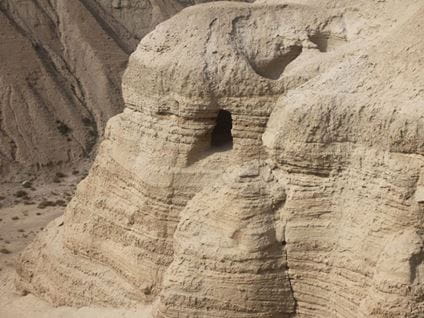 The caves near Qumran where many scrolls were found
WEBSITES (the best of the best)
**Israeli Department of Antiquities: http://www.deadseascrolls.org.il/ Includes photos of scrolls, detailed information, lots of resources. n.b.: this website includes scrolls from other caves south of Qumran (a larger corpus than we dealt with in this course)
**Orion Center for the Study of the Dead Sea Scrolls: http://orion.mscc.huji.ac.il/ Includes a Virtual Tour of the settlement of Qumran led by archaeologist Jodi Magness
http://virtualqumran.huji.ac.il/tour/VirtualTourIntroduction.htm
Library of Congress exhibit on the Dead Sea Scrolls, with a very useful glossary: https://www.loc.gov/exhibits/scrolls/
SPECIFIC SCROLLS:
The Digital Dead Sea Scrolls
Images and summaries of scrolls
The Great Isaiah Scroll
Scroll fragments from Cave 4
http://virtualqumran.huji.ac.il/tour/VirtualTourIntroduction.htm
Library of Congress exhibit on the Dead Sea Scrolls, with a very useful glossary: https://www.loc.gov/exhibits/scrolls/
SPECIFIC SCROLLS:
The Digital Dead Sea Scrolls
Images and summaries of scrolls
The Great Isaiah Scroll
Scroll fragments from Cave 4
MORE WEBSITES ON RECENT DISCOVERIES AND ONGOING CONTROVERSIES:
Poor Health at Qumran
Animated map of rulers of ancient Middle East
Fake DSS at the Museum of the Bible
High-Tech and DSS
Articles on the DSS in the Biblical Archaeology Society library (you may have to join BAS to access these, but it is well worth it. Lots of material on biblical archaeology in general)
My mystery novel set in the Dead Sea region, but with different texts (the Gnoststic Gospels) at the heart of the story:

Two archaeologists race to find an ancient manuscript in Israel before Christian fanatics destroy it. More about the novel. Author website: www.sarahwisseman.com
Animated map of rulers of ancient Middle East
Fake DSS at the Museum of the Bible
High-Tech and DSS
Articles on the DSS in the Biblical Archaeology Society library (you may have to join BAS to access these, but it is well worth it. Lots of material on biblical archaeology in general)
My mystery novel set in the Dead Sea region, but with different texts (the Gnoststic Gospels) at the heart of the story:


