Thursday, March 6, 2025

Archaeology Underwater and from the Air

 This class is offered during March 2025 at OLLI at Illinois.

Introduction

In the early days of archaeology, archaeologists excavated temples and tombs at well-known sites in the Middle East and around the Mediterranean. As the field has become more interdisciplinary and surveying techniques more advanced, the focus has shifted to regional archaeology and selective excavation of less accessible sites.

 Landscape archaeology, sometimes called environmental archaeology, is “big-picture” archaeology in which single archaeological sites are studied in the larger contexts of environment and climate. Researchers study how people use local resources for food and shelter and adapt to changing temperatures and water levels. Advances in remote sensing allow locating and mapping cities previously obscured by jungles and hunter-gatherer sites now underwater along ocean shores or lakebeds. Advances in computing and artificial intelligence allow integration of huge data sets gathered by both older formats (e.g. maps) and by new technology (e.g. LiDAR and satellite views). 

LiDAR video 

 The class is organized by geographical region, with heavy emphasis on the Middle East and Mediterranean areas.

The first class covered the above introduction and concentrated on "Doggerland," the area of submerged land between Britain and Scandinavia during the Last Glacial Maximum. Stunning evidence of Mesolithic hunter-gatherer cultures (stone tools, wooden structures, artifacts made of bone and antler) have been recovered from Doggerland by using underwater surveying.


                                                    Francis Lima-own work (Wikipedia)

One of the sites we looked at was Star Carr in Britain, and we saw a small portion of a documentary. (I recommend looking at the rest of it, especially the section* near the end on how ancient wood soaked in sea water is conserved).

Website 

Documentary* 


Saturday, April 20, 2024

Animals and Other Pets classes 3 and 4

 In the last two classes, we moved from the Ancient Near East to Greece and Italy. Greek and Latin texts provide a wealth of human-animal relationships, everything from dogs and falcons to bees and cicadas. Several tombstones with inscriptions about favorite dogs were particularly touching.


 Find the book


One unusual video described and illustrated how Roman soldiers trapped and transported animals from all over the Roman Empire and sent them to the Colosseum in Rome.

In the last lecture, we sampled some South American animals (the fox, depicted in temple art of Peru and in the night sky as a constellation) and different kinds of camelid (llama, alpaca, guanaco, etc)

We finished with North America, especially our own state of Illinois, with dog and cat burials particularly this charming bobkitten who was buried with "pomp and circumstance" in the form of a shell necklace.

Illustration by K. Farnsworth, ISAS


Monday, April 15, 2024

Cats in Ancient Egypt

Class 2 moved from Mesopotamian to Egyptian Animals. I introduced one of my favorite Egyptologists, Salima Ikram, who has posted two videos about Egyptian mythology and animals, especially cats.

Animal cults (5 min)

Documentary on cats (45 min)

Wednesday, March 27, 2024

The Archaeology of Pets and Other Animals (4 week class, spring 2024)

Summary: Man’s historical relationship with animals goes far beyond using animal parts for food, clothing, and ornaments. This class will begin with trusted pets (e.g. dogs, cats, and birds). Later we will consider relationships with animals who serve specific functions (e.g. plowing, milking, transport, war) and odd companions (e.g. snakes, geese). When were animals first domesticated? Which animals ate and slept with their humans? Which animals achieved sacred status, either as gods or as symbols of transformation and the afterlife? Types of evidence will include pet cemeteries around the world, stables and other enclosures, bone and coprolite analyses, art, and literature.

The first class introduced different types of evidence archaeologists use, including burials of animals with humans, artifacts, art, literature, and faunal analysis. 

Video: What is Zooarchaeology? (7 minute Australian video)


Find this book                                 Find this book


Friday, March 3, 2023

Archaeology of Health and Disease, Part II

 ARTICLE: 

“Indiana Bones” visits ancient Pompeii.

VIDEOS: YouTube video on Day in the Life of an Egyptiandoctor.

 Curator’s Corner movie, British Museum, on recent mummy analyses. 

 A Humorous Medical video on Galen.

SHORT STORY: “Death on Display” by Sarah Wisseman


Sunday, February 26, 2023

Archaeology of Health and Disease, Part I

 Recently I taught this course at our local Osher Lifelong Learning center. Here are some of the links I promised for more information or deeper dives:

An amputation in the Stone Age.

MESOPOTAMIA

Very good summary by Prof. Nancy Demand

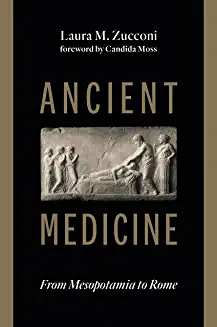
Online article by Laura Zucconi, author of an excellent "deep dive" book, Ancient Medicine from Mesopotamia to Rome (2019)


More on Mesopotamian health and medicine.

EGYPTIAN MEDICINE

Egyptian leg brace

ROMAN MEDICINE

Evidence for spinal tuberculosis at Pompeii.


Tuesday, February 22, 2022

Cosmic Places and Sacred Landscapes

 Weeks 3 and 4 of my "Discover the Ancient Sky" class covered wandering planets, key stars and constellations, and huge sites that represented sacred landscapes that are far more than solar and lunar observatories.

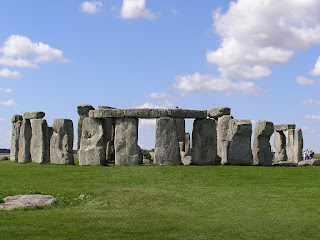
https://en.wikipedia.org/wiki/Stonehenge#/media/File:Stonehenge2007_07_30.jpg

Links to Key Sites and Monuments:

STONEHENGE

CHACO CANYON

Links to cultural stuff:

How to read the Maya Calendar

Inca astronomy in South America. Also here.

Videos seen in class:

CAHOKIA

CHACO CANYON

CHICHEN ITZA

CHANKILLO

Additional Bibliography:

Aubrey Burl (2005)  Prehistoric Astronomy and Ritual

J. L. Heilbron (2001) The Sun in the Church: Cathedrals as Solar Observatories

University of Maryland Archaeoastronomy center

UNESCO portal: Portal to the Heritage of Astronomy

Astronomical links: 

Stanford University Solar Center