Thursday, April 30, 2026

Dark Side of the Moon

This is my newest book, a stand-alone published in 2025.

"When a dead body washes up on the rocks outside her grandfather’s Maine house, art historian Lin Abrams’ peaceful sabbatical is rudely interrupted. She becomes entangled with Zach, the boy who found the body, and Zach’s mysterious father, Steven Calloway. Steven recruits Lin to help solve a problem: what do paintings, drug smuggling, and cults have to do with each other? Answer: money laundering, and perhaps the location of Lin’s missing daughter."

It is set on the coast of Maine, where my grandfather had a house near Biddeford and a magical beach, complete with huge rocks for sitting and climbing. 

The cover was created by my granddaughter, Fable, after I noticed the artwork she was making on her laptop. It was a wonderful experience going back and forth talking about theme, design, and color. She made me proud.

ebook (also on Hoopla and several other platforms)

print edition

audiobook

 Fable Wisseman audio cover


The Flora Garibaldi Art History Mysteries

Flora Garibaldi is a half-Italian conservator working and living in Italy. She grew out of my first excavation experience near Siena, my favorite medieval town. Subsequent trips to Italy took me all over to the many museums I needed to visit to write my archaeology dissertation. I fell in love with the country, the food, and the language, but I didn't live there long enough to feel like a true native.

This series grew out of my intense interest in antiquities smuggling and art forgery, perhaps because of my experience of being named an art "curator" when my training was still very recent. How could I weight in as an expert on any type of object, or decide if something was authentic without help? 

The answers came from my next job in the interdisiplinary field of archaeometry, or archaeological science, which forced me to learn about scientific techniques now used by modern conservators and other researchers who want to know where and how a painting or vase was constructed and how it traveled from its place of manufacture to its current home. Chemistry is especially useful in such work, because obtaining the chemical composition of something can tell you what type of clay was used in pottery, or whether a pigment is ancient or modern. And medical imaging (X-rays and CT scans) can reveal rhe technology of a terracotta statue or what's inside a mummy (an animal, or a bunch of reeds?)

Monday, April 27, 2026

The Lisa Donahue Archaeological Mysteries

I used to work in an attic museum with multiple rooms off a dark hallway, a trick elevator, and an archaic security system. Pigeons flew in and out of the galleries after sneaking in from a broken window, and locking up at night was so spooky that I decided a mystery should be set there. Add a mummy project to the mix and  the novel Bound for Eternity was born: Lisa Donahue, archaeologist and museum curator, discovers that an Egyptian mummy holds the clues to murder in her Boston museum.

Book2, The Dead Sea Codex, is a prequel to B for E even though I wrote it later: A younger Lisa returns to Israel to help a former lover investigate a mysterious ancient document that appears on the black market. It is set in Israel (where I lived and studied archaeology for almost two years in the 1970s).

Book 3, The Fall of Augustus: When someone kills Lisa Donahue’s boss by dropping a Roman statue on him, she becomes Interim Director of her Boston University Museum. Suddenly she’s juggling murder, artifact theft, and a complicated move into a new building. Then the treacherous Dean announces her replacement: a vicious woman from Lisa’s past…

Book 4, The House of the SphinxLisa Donahue and her physician husband James Barber hope their delayed honeymoon in Egypt will be a peaceful trip in an exotic setting. Instead, their Nile cruise is overshadowed by rumors of a deadly disease. After James recognizes the symptoms of smallpox at Karnak, he is recruited as a medical officer by the Centers for Disease Control. When their cruise ship is quarantined, Lisa is separated from her husband. Terrified that James will succumb to the disease he is fighting, Lisa helps an old flame investigate a plot that could ignite the entire Middle East: infecting Western tourists with smallpox virus stolen from the former Soviet Union.

All four novels are available as ebooks (multiple markets, including Hoopla), print, and audio.


Sunday, March 29, 2026

Skullduggery in Archaeology and Art History

What happens to cultural artifacts (e.g. an Egyptian mummy, a Greek vase, or an 18th century painting) after their creators are dead? Potentially valuable or exotic objects are exported, copied, displayed in museums, or hidden from public view in warehouses and private collections.

Across the world, art and artifacts turn out to be worth what people will pay, and sometimes reputable museums turn a blind eye to objects acquired with dubious provenances. This class examines several topics, including colonial appropriation by several countries of Mediterranean antiquities and the looting of archaeological sites. We will also examine famous cases of forged artifacts in museums and how curators and scientists work together to unmask forgeries. OLLI at Illinois 2026 spring course.

Links of interest:

The illegal market in antiquities.

Novafilm “The Fine Art of Faking It.” Wonderful documentary on art forgery, including stories of a Grunevald painting, the Getty Museum Greek kouros, the Rembrandt research team, and many other famous cases. (NOVA 1991)

The Shroud of Turin revisited.


Sarah's "Shroud of Charlie" illustrates how a 3D face rubbing does NOT resemble the Shroud...

Non-destructive research on the University of Illinois Egyptian mummy.

Fake Dead Sea Scrolls at the Bible Museum in Washington DC.

Forgery of a Winslow Homer painting?


Saturday, March 22, 2025

Archaeology Underwater and from the Air, Part IV

Our fourth class focus is North America and underwater archaeology on the east and west coasts and the Great Lakes. The most interesting takeaway is how recent discoveries document the movements of early hunter-gatherers into and across the U.S. much earlier than 12,000 years ago.

Videos:

Shallow water archaeology in Florida with Jessica Cook-Hale

another north Floria river project

First Americans and Clovis debate

"Stonehenge" under Lake Michigan


Monday, March 17, 2025

Archaeology Underwater and from the Air, Part III

In our third class, we contined to explore shipwrecks around the Mediterranean, especially off the coasts of Israel, Turkey, Sicily, and Greece. The focus was digs which special challenges (depth, interference by thrill seekers) and the incredible finds of metalworking and glassworking debris from sites explored by the Institute of Nautical Archaeology in Texas. Then we switched to South and Central America, illustrating the new cities and sites found by LiDAR and analyzed with AI. My favorite is the Mayan city Valeriana, discovered by a graduate student working at home on his computer (he used LiDAR data collected by another team for a different purpose 10 years ago).

Other links and videos:

Classical wreck off the coast of Sicily (embedded video on website shows unusual preservation of wood)

The "Glass Shipwreck" at Serce Limani, Turkey

 "Jesus boat" video


Sunday, March 16, 2025

Archaeology Underwater and from the Air, Part II

 We discussed space archaeology, especially the work of Sarah Parcak, in Egypt, Asia, and around the Mediterranean Sea. There are many examples of upgraded LiDar and other surveying techniques combined with older aerial photos, helping archaeologists find whole cities in the ancient world. Data are integrated by artificial intelligence, resulting in new maps of extensive areas in the former Soviet Union and the Arabian peninsula.

Then we switched to deepwater shipwrecks and introduced sonar and other techniques used underwater to locate and map sites. Here are some of the web links and videos from class:

Cemetery in Sudan (National Geographic)

7.000 year old road discovered off coast of Croatia

Minoan shipwreck

Uluburun wreck found off coast of Bodrun, Turkey (Institute of Nautical Archaeology)

Uluburun video

Thursday, March 6, 2025

Archaeology Underwater and from the Air

 This class is offered during March 2025 at OLLI at Illinois.

Introduction

In the early days of archaeology, archaeologists excavated temples and tombs at well-known sites in the Middle East and around the Mediterranean. As the field has become more interdisciplinary and surveying techniques more advanced, the focus has shifted to regional archaeology and selective excavation of less accessible sites.

 Landscape archaeology, sometimes called environmental archaeology, is “big-picture” archaeology in which single archaeological sites are studied in the larger contexts of environment and climate. Researchers study how people use local resources for food and shelter and adapt to changing temperatures and water levels. Advances in remote sensing allow locating and mapping cities previously obscured by jungles and hunter-gatherer sites now underwater along ocean shores or lakebeds. Advances in computing and artificial intelligence allow integration of huge data sets gathered by both older formats (e.g. maps) and by new technology (e.g. LiDAR and satellite views). 

LiDAR video 

 The class is organized by geographical region, with heavy emphasis on the Middle East and Mediterranean areas.

The first class covered the above introduction and concentrated on "Doggerland," the area of submerged land between Britain and Scandinavia during the Last Glacial Maximum. Stunning evidence of Mesolithic hunter-gatherer cultures (stone tools, wooden structures, artifacts made of bone and antler) have been recovered from Doggerland by using underwater surveying.


                                                    Francis Lima-own work (Wikipedia)

One of the sites we looked at was Star Carr in Britain, and we saw a small portion of a documentary. (I recommend looking at the rest of it, especially the section* near the end on how ancient wood soaked in sea water is conserved).

Website 

Documentary


Saturday, April 20, 2024

Animals and Other Pets classes 3 and 4

 In the last two classes, we moved from the Ancient Near East to Greece and Italy. Greek and Latin texts provide a wealth of human-animal relationships, everything from dogs and falcons to bees and cicadas. Several tombstones with inscriptions about favorite dogs were particularly touching.


 Find the book


One unusual video described and illustrated how Roman soldiers trapped and transported animals from all over the Roman Empire and sent them to the Colosseum in Rome.

In the last lecture, we sampled some South American animals (the fox, depicted in temple art of Peru and in the night sky as a constellation) and different kinds of camelid (llama, alpaca, guanaco, etc)

We finished with North America, especially our own state of Illinois, with dog and cat burials particularly this charming bobkitten who was buried with "pomp and circumstance" in the form of a shell necklace.

Illustration by K. Farnsworth, ISAS


Monday, April 15, 2024

Cats in Ancient Egypt

Class 2 moved from Mesopotamian to Egyptian Animals. I introduced one of my favorite Egyptologists, Salima Ikram, who has posted two videos about Egyptian mythology and animals, especially cats.

Animal cults (5 min)

Documentary on cats (45 min)

Wednesday, March 27, 2024

The Archaeology of Pets and Other Animals (4 week class, spring 2024)

Summary: Man’s historical relationship with animals goes far beyond using animal parts for food, clothing, and ornaments. This class will begin with trusted pets (e.g. dogs, cats, and birds). Later we will consider relationships with animals who serve specific functions (e.g. plowing, milking, transport, war) and odd companions (e.g. snakes, geese). When were animals first domesticated? Which animals ate and slept with their humans? Which animals achieved sacred status, either as gods or as symbols of transformation and the afterlife? Types of evidence will include pet cemeteries around the world, stables and other enclosures, bone and coprolite analyses, art, and literature.

The first class introduced different types of evidence archaeologists use, including burials of animals with humans, artifacts, art, literature, and faunal analysis. 

Video: What is Zooarchaeology? (7 minute Australian video)


Find this book                                 Find this book


Friday, March 3, 2023

Archaeology of Health and Disease, Part II

 ARTICLE: 

Indiana Bones” visits ancient Pompeii.

VIDEOS: YouTube video on Day in the Life of an Egyptiandoctor.

 Curator’s Corner movie, British Museum, on recent mummy analyses

 A Humorous Medical video on Galen.

SHORT STORY: “Death on Display” by Sarah Wisseman


Sunday, February 26, 2023

Archaeology of Health and Disease, Part I

 Recently I taught this course at our local Osher Lifelong Learning center. Here are some of the links I promised for more information or deeper dives:

An amputation in the Stone Age.

MESOPOTAMIA

Very good summary by Prof. Nancy Demand

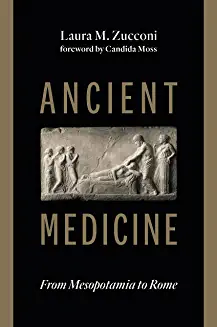
Online article by Laura Zucconi, author of an excellent "deep dive" book, Ancient Medicine from Mesopotamia to Rome (2019)


More on Mesopotamian health and medicine.

EGYPTIAN MEDICINE

Egyptian leg brace

ROMAN MEDICINE

Evidence for spinal tuberculosis at Pompeii.


Tuesday, February 22, 2022

Cosmic Places and Sacred Landscapes

 Weeks 3 and 4 of my "Discover the Ancient Sky" class covered wandering planets, key stars and constellations, and huge sites that represented sacred landscapes that are far more than solar and lunar observatories.

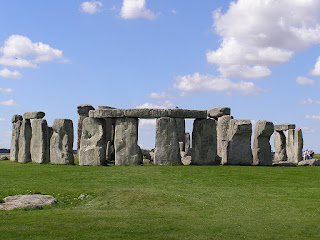
https://en.wikipedia.org/wiki/Stonehenge#/media/File:Stonehenge2007_07_30.jpg

Links to Key Sites and Monuments:

STONEHENGE

CHACO CANYON

Links to cultural stuff:

How to read the Maya Calendar

Inca astronomy in South America. Also here.

Videos seen in class:

CAHOKIA

CHACO CANYON

CHICHEN ITZA

CHANKILLO

Additional Bibliography:

Aubrey Burl (2005)  Prehistoric Astronomy and Ritual

J. L. Heilbron (2001) The Sun in the Church: Cathedrals as Solar Observatories

University of Maryland Archaeoastronomy center

UNESCO portal: Portal to the Heritage of Astronomy

Astronomical links: 

Stanford University Solar Center

Monday, February 14, 2022

Our Wonky Moon and Lunar Alignments

 Last week we continued with solar alignments at sites like Chankillo, Peru (see this wonderful video) and spent some time on the lunar orbit. Because the moon's orbital cycle is 18.6 years to repeat its tilting pattern, it is very hard to visualize. The best explanation I have found is here, at the University of Massachusetts Sunwheel website (a sort of mini-Stonehenge created by Prof. Judith Young).

            Thirteen towers at Chankillo. Source: photo by David Edgar, Wikipedia

Another wonderful reference is "Ancient Observatories," by Deborah Scherrer at the Solar Center at Stanford University.

Thursday, February 3, 2022

Why study ancient stargazers?

 During the month of February 2022, I'm teaching an Olli course on Discovering the Ancient Sky: The Archaeology of Astronomy.

Why study ancient stargazers? Because people discovered thousands of years ago that being able to predict celestial events such as eclipses of the sun or the flooding of major rivers gave them control over human resources and human behavior. How much of early astrology and astronomy is based on observation vs. mathematics? We owe a considerable debt to ancient Babylonia and Egypt for their accurate observations and timekeeping and to Greek philosophers for their views of the cosmos. However, what people were able to observe depends on several things: time of year and season (controlled by the earth’s movement around the sun and the earth’s tilt), and latitude. How ancient sites were oriented depended on what various cultures considered important (e.g. direction of Nile flow and rising of the sun in Egypt vs. Cahokia’s lunar and Milky Way alignments).

I consulted many books and websites to prepare for this class. Here are some of my favorites: 


 *Taylor, Ken. Celestial Geometry: Understanding the Meanings of Ancient Sites (2012).

*Hadingham, Evan. Early Man and the Cosmos (1984).

*Cornell, James. The First Stargazers: An Introduction to the Origins of Astronomy (1981).

*Aveni, Anthony. People and the Sky: Our Ancestors and the Cosmos (2008).

Aveni, Anthony. Stairways to the Stars: Skywatching in Three Great Ancient Cultures (1997).

Moche, Dinah L. Astronomy: A Self-teaching Guide, 8th Edition (2015).

Marshak, Stephen and Robert Rauber. Earth Science: The Earth, the Atmosphere, and Space, especially Part 5: “Our Solar System and Beyond” (2020 edition).

For a video on the earth's tilt and how that affects the seasons, go here.

For the video on New Grange, Ireland that I showed during the first class, go here.

Wednesday, March 17, 2021

Mapping sites from above and Cahokia

In our last lecture for "Overlooked Archaeology," we discussed LiDAR and satellite photography as well as older remote-sensing techniques for discovering and mapping archaeological sites.

LiDAR

Good summary of LiDAR technique with examples from around the world.

SPACE ARCHAEOLOGY

Great Ted talk by archaeologist Sarah Parcak

Wonderful book (available on Amazon):


CAHOKIA: 

Best website, hands-down. Called "Re-envisioning Greater Cahokia," it is an interactive map with tons of information on recent discoveries.

Videos: Hour-long lecture by archaeologist Timothy Pauketat
Shorter introduction to a longer PBS video

YouTube channel for ISAS. includes hour-long lecture on Cahokia's red goddesses by Tom Emerson and a short clip on current use of drones as well as other interesting clips.

Articles and book excerpts on Cahokia:

  Tim Pauketat on Cahokia causeway and cosmology

An excerpt from Cahokia: Mirror of the Cosmos by Sally A. Kitt Chappell

Grossmann celts and Nick Wisseman discovery 


Wednesday, March 10, 2021

Health and Disease in ancient times...

 This topic is from the third lecture of "Overlooked Archaeology." We covered heart disease and many other ailments in overstudied mummies such as the Italian Iceman and the Chinese noblewoman Lady Dai. We also discussed DNA studies of teeth, which reveal diet, disease, and migration patterns, ancient surgery and medicine, evidence of tooth decay in skeletal remains, and early dental remedies.

Videos

Carolyn Freiwald on Tales from Teeth

A humorous medical clip about Galen, ancient Rome's most notorious doctor

Websites

The Iceman's poor health

Lady Dai, Chinese mummy

Woman the Hunter 

The Beaded burial at Cahokia

The death of Pliny from going too near an erupting volcano


Wednesday, March 3, 2021

Overlooked Archaeology, lecture 2 notes and links

 During our second lecture, we finished up a discussion of ancient pets and animals in religion and moved on to ancient sanitation (especially in Roman cities) and the procuring of food before corn agriculture in Illinois. The last major topic was consumables: wine, beer, olive oil, insect repellent, chocolate, and the "black drink" of North America.

Videos:

A cherished pet bobkitten in Illinois

Plumbing at Petra in Jordan that allowed for gardens and swimming pools in a desert setting

Interesting links:

Plumbing: great article on Roman sanitation.

Vegetarian diet in Egypt

How the Egyptian pyramid workers got fed

Mesopotamian recipes

Early French wine-making

Cahokia black drink 


Tuesday, February 23, 2021

Overlooked Archaeology

I am currently teaching a course, “Overlooked Archaeology, at the Osher Lifelong Learning Institute at the University of Illinois (February-March 2021). The title “overlooked” means topics I have not addressed before, not ones that professional archaeologists ignore. It allows me to explore the odder byways of my profession while still incorporating recent advances and new information that I discover in magazines like Archaeology, The Biblical Archaeology Review, or from headlines in the New York Times or New Scientist.

Class Description:

Hollywood archaeology features spectacular discoveries of jewel-laden tombs and lost temples. In everyday archaeology, many discoveries are made far from the original site: in the laboratory, in a museum, or on a computer. Technological advances, especially in the biological sciences, make it possible to investigate everything from ancient medicine to the evolution of agriculture. New kinds of imaging and remote sensing help us read obscured texts and map roadways and underground structures. This class explores some of the odder byways of archaeology: domesticated dogs, beer-making, dental health, pleasure gardens, and locating new sites from space.

In lecture one, we talked about how the discipline of archaeology began with excavating large public buildings (tombs, temples, meeting halls) and collecting inorganic materials (metal, stone, and ceramic). Over time, the focus has shifted to domestic architecture and the artifacts of daily life: private homes, garbage pits, the graves of commoners, and even historic privies. I introduced the domestic architecture of three sites widely separated in space and time: Skara Brae (Scotland), Karanis (Egypt), and Ostia, Italy. We also began a section on ancient pets with the domestication of dogs.

          Video links:

Skara Brae

Roman Ostia 

Book recommendations:


Sarah Parcak, Archaeology from Space

Paul Bahn, The Bluffer’s Guide to Archaeology

Karanis: A Roman town in Egypt (Kelsey Museum Publication 1)

 Authors who write wonderful fiction about ancient Rome and Romans:

Lindsey Davis, Simon Scarrow, Steven Saylor (all use rich historical detail and archaeological records)

 *For more archaeological fiction, check out this review site: https://mvac.uwlax.edu/book-reviews/ (includes a few of my own novels)

Resources for Illinois and Midwestern archaeology:

Our own IllinoisState Archaeological Survey

East Central Illinois Archaeological Society (ECIAS), part of the Illinois Association for the Advancement of Archaeology: http://www.museum.state.il.us/iaaa/easthome.htm

Local lectures and some volunteer opportunities are available (and will return after COVID).

Midwestern cultures (focus on Wisconsin): https://mvac.uwlax.edu/PreEuropeanPeople/